Showing posts with label South America. Show all posts

October 28, 2010

Tonolec - Electronic Toba Music

The Toba are an indigenous group from Argentina, Bolivia and Paraguay. The Argentian band Tonolec plays tribute to them by mixing some of their traditional songs with Electronic music, producing one of the most inspiring fusions I've heard recently.


Techo de Paja (2008)

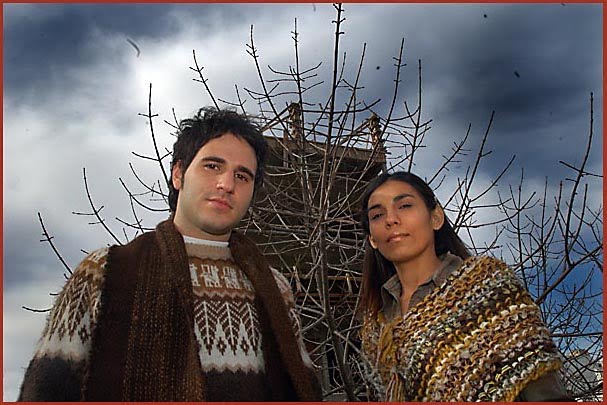
Charo Bogarín, the singer, has Guaraní origins. She formed with Diego Perez the band Tonolec in 2002. In 2005 they released their first album, named after the band.


Llora Tus Penas (2008)

January 14, 2010

Alexandre Lima - Reggae - Electronica - Psychedelia

alex victoria street Released independently, Rádio Experienza, Alexandre Lima’s first album, is full of experimentation, not stopping himself in just one genre but exploring the possibilities of well conceived fusions. From reggae to rock to electronica, the sound of Alexandre is fresh and captivating. For the recording of Rádio Experienza, many recognized Brazilian musicians collaborated, such as the legendary guitarist Dado Villa Lobos or DJ Alex Zeela in the song Os Deuses do capitalismo (The gods of capitalism).

Ouro Negro (2008)

Os deuses do capitalismo (2008)

January 11, 2010

Curupira - Aphrodisiac Colombian Music

Curupira-1

The vibrant sound of the Colombian bagpipes  (or gaita, if you prefer that name) and the voice of Malpelo, a traditional singer from Cartagena and the lead voice of this band, are the elements that I first loved from Curupira. Their wild sound with a touch of rock guitars has made them one of the pioneers of the contemporary folk movement in Bogotá, the capital of Colombia.

Created by Juan Sebastián Monsalve, this group has incorporated rhythms from almost all the Colombian regions: the coasts, the Amazon and Orinoco. Its name means ‘jungle spirit’ in Ticuna language.  Curupira made its debut with the following song, El Borojó, a fabulous piece about a fruit famous for its use to increase the sexual appetite.

El Borojó (2003)
 
Oye perilla (2003)

December 27, 2009

Adrian Dutchin - New Soca From Guyana

Adrian2

After an intense search through the music from Guyana for several days, Adrian Dutchin came to me as a surprise with  a beautiful Christmas song featured in Guyana Music Arts blog. Upon a little internet investigation, I knew this was the Guyanese artists I was looking for. A clever mix of soca rhythms, a very popular style in this country, with influences from R&B and chutney.

Display

At the age of 22, he released his first album titled No limits, after his participation in several bands, including one called Seven which was dissolved. Recently, in 2009, he released an album called Finally. Dutchin was also nominated to the 2009 Accolade awards, nomination which, according to Guayana Music Arts, excited this talented artist. With Adrian Dutchin, Sound Energy Flux now has music from all the South American countries! Yaaayy! :D

Merry Christmas!

August 15, 2009

Ukamau Y Ke - Rap With Andean Music

abraham bojorquez 3 Wow, it’s been so long since our last post. But no, Sound Energy Flux is not dead. Something that has brought so much to our life can’t simply die. Here we go again.

Ukamau y ke has been one of my favorite bands lately. Their lyrics denounce social injustice and economic inequality in Bolivia. Their fusion of hip hop with Andean folk music has, likewise, a social reason behind it, namely, the highlighting of the Bolivian culture and heritage, which is slowly getting lost due to the dominance of foreign interests in the media.

América Latina (2007)

In an unfortunate event, Abraham Bojorquez, Ukamau y ke's founder, recently passed away being only 26 years old in a vehicular accident. Abraham headed the Wayna rap movement, which is, in my opinion, one of the most original things that has happened to Latin American hip hop, featuring rapping in Aymara, a native Bolivian language, dressing with traditional Bolivian clothes (as opposed to the American hip hop clothing) and, of course, mixing traditional folk melodies with rap.

Medios Mentirosos (2007)

July 3, 2009

Novalima – Afro-Peruvian Fusion

art071_profile Recently Novalima released a new album with Cumbancha titled Coba Coba Remixed. I encourage you to go visit the last link in order to listen to the album or to purchase it. But if you want to know more about this Peruvian fusion band, we will tell you here the basics.

It all starts when four friends from Lima who travelled to different parts of the world, Peru, Spain, UK and China, and lived there for many years, returned to Peru to make a musical experiment previously unheard of in their country: Afro-Peruvian rhythms  are mixed with dub and other electronic music genres.

Machete

Cumbancha rightly describe their music as a search for the common ground between past and future, between tradition and innovation:

Their efforts have also helped bridge the divide between the Peruvian mainstream and the Afro-Peruvian community, a minority population that has struggled against discrimination and the threat of cultural dissolution for generations.

While their sound is futuristic and cutting-edge, the roots of Novalima's music stretch back hundreds of years to the times of slavery and Spanish colonial rule.

Libertá

June 14, 2009

Gondwana – Good Vibes From Chile

gondwana1_web The most important Chilean reggae band, Gondwana started back in 1987. Their success was not effortless. They played for almost 5 years in schools, universities and small events, before they could launch their first album, titled Gondwana, in 1992. From that moment on, however, their music has been a commercial success, and more than one thousand live concerts are part of their history.

Felicidad (2002)

Armonía de amor (1998)

May 27, 2009

Andrea Echeverry – Songs of the Motherhood

andreaecheverry

Today we are celebrating our 100th post in Sound Energy Flux. For this special occasion we want to talk about one of our most loved singers, a figure that has greatly influenced the Colombian rock scene.

Andrea Echeverry used to be an artist who worked in ceramics. She studied arts and made post-graduate studies at the School of Art and Design in Plymouth, UK. But in 1990, when she joined a band called Delia y Los aminoácidos, she started an unexpectedly prolific career as a singer. In 1992, this band turned into Aterciopelados, the most innovative rock band of Colombia and Latin America.

Andrea hasn’t been the typical hot female pop singer. The way she dresses has always been recognized for its extravagance. The strength of her voice, her sincere lyrics and her natural attitude, oppossed to the pop star stereotype, have captivated people and critics around the world.

Lactochampeta (2006)

Her solo album, a tribute to motherhood, was recorded in 2006 after the birth of her first daughter, Milagros. This album, whose lyrics are primarily about maternal feelings, contains the song Lactochampeta, an ode to lactation and a lullaby to her baby.

The following song is an adaptation of Canción Protesta, composed by Andrea. It was performed by various artists who come from many countries around the world, and was part of a campaign of Amnesty International against the impunity in human rights violations.
The price of silence (2008)

May 17, 2009

Sepultura - Metal roots

Sepultura-Roots-Frontal Sepultura doesn’t need presentation. This is one of the few metal bands whose importance gets to the point of helping define the metal genre itself. Powerful guitar rhythms, ethnically inspired percussions,  emphasis on groove over speed (from the release of Chaos A.D onwards), socially aware lyrics, and the potent voice of Max Cavalera (who was later succeeded by Derrick Green), are some of Sepultura’s most acclaimed attributes.

The Hunt(1993)

The following song comes from their sixth studio album, Roots. This album masterfully continued what Sepultura had started in Chaos A.D 3 years earlier, namely, an experimentation with the Brazilian music rhythms that were as far as inviting Carlinhos Brown, a popular Brazilian musician previously featured in this blog, to participate in the co-authoring and vocals of the following song, titled Ratamahatta.

Ratamahatta (1996)

May 11, 2009

Dancehall Crew - Surinamese reggae

ScreenShot001 Start with African rhythms. Add some Indian instruments and harmonies. Now put Caribbean energy and landscapes into the mix. Finally, add some lyrics in Dutch and push play. What you get is the music of Suriname, one of the most distinctive countries in South America.

Dancehall Crew is a good example of the Surinamese authenticity. I don’t recommend you to watch the following video if you are easily impressed, since it contains some violent images. The structure of the song is, however, interesting. It starts with one rhythm and, all of a sudden, it turns into another one, in a different tempo. The same thing happens several times during the song. This is something you don’t see often in Reggae music!

Faya in a ghetto

Wakafaya

May 4, 2009

Daniel Melingo – Damned tango

melingo2-759804The strength of some tango lyrics has been an enigma for me. I have never understood the Lunfardo, but I have a feeling that the lyrics say something about the people you can find on the streets and their lives. The following song of Daniel Melingo is more understandable to me. That strange slang is used less but preserves that melancholic and vigorous energy that made me feel attracted to the urban nature of tango:

Narigón

The bizarre lyrics of Melingo tell stories about the underworld of the city of Buenos Aires: the city of the drug addicts, the prostitutes or the criminals, with a touch of black humor and updated to our times.

Daniel Melingo, who was a member of the band ‘Los abuelos de la nada’, is nowadays a poet of tango who sings about the lives of marginal people. The following song, included in his last album ‘Maldito tango’ is an example of his particular style and a tribute to the old poets of Lunfardo slang.

Leonel el feo

April 28, 2009

Susana Baca – The black side of Peru

38049_D The afroperuvian music had been for many years an unknown heritage that was hidden behind the traditional andean music. But in 1995, when David Byrne discovered Susana Baca’s talent, the sounds of instruments like the peruvian cajón were shown to the world, in the disc ‘El alma del Perú Negro’, edited by Luaka Bop, the record label of Byrne.

Born in Chorrillos, the black neighborhood of Lima, Susana Baca grew up in an atmosphere with a high musical richness. Her father was a guitarist, and her aunts sang with the style of Aretha Franklin. Now Susana, a descendant of black and indigenous people, is considered the most important singer of Peru, and the heiress of Chabuca Granda, a legend of the afroperuvian song.

Toro mata

Married with the sociologist Ricardo Pereira, Susana Baca has dedicated her life to the research of the afroperuvian music with him. They published the book ‘El fuego y el agua’, where they included testimonies and documents of this ethnic group and its musical legacy.

De los amores

April 23, 2009

Julio Jaramillo - Hate him

botecito-devela-julio-jaramillo_imagenGrande “Hate me, but keep in mind that you only hate what you have loved” translates the song "Ódiame" (Hate me) of Julio Jaramillo, an Ecuadorian Pasillo singer acclaimed in all of South America, but specially in his country, where he is almost a national symbol. He was only 42 years old when he died, but in this short time he recorded nearly 3500 songs and still had time to procreate 42 children.

Ódiame

The following song, titled “Nuestro juramento” (Our promise) talks about a promise of love that lasts beyond death. The video is from a biographical movie about Jaramillo, where his role is played by his son Julio Jaramillo Sanchez.

Nuestro Juramento

April 17, 2009

Agustín Barrios - How to write a poem with a guitar

25994347 Agustín Barrios Mangoré, born in Paraguay in 1885, is one of the most important classical guitar composers of the 20th century. At the young age of 15, he started his music studies at the Asuncion National University. Just 8 years later, in 1909, he made the first commercial classical guitar recording in history.

His broad knowledge of music, allowed him to make compositions that ranged from baroque to folk music arrangements. The following work, interpreted by the Colombian guitarist Fernando Ramirez, is one of the finest arpeggio studies for guitar.

Las Abejas

Many world-class guitarists were fans of Barrios, with Andrés Segovia, David Russell and John Williams among them. John Williams, who plays the piece Choro da saudade in the following video, said of Barrios:

As a guitarist/composer, Barrios is the best of the lot, regardless of era. His music is better formed, it's more poetic, it's more everything! And it's more of all those things in a timeless way.

Choro da saudade (Recorded in 1979)

April 13, 2009

Los Kjarkas - Music from the high mountains of Bolivia

Los Kjarkas en concierto Inspired lyrics, beautiful folk melodies and more than 35 years of history make Los Kjarkas one of the most representative bands of Andean music. They have performed around the world, particularly in Japan, where their song “Florcita azul” got the 10th place on a folk music contest, among more than 1800 contestants. All in all, I liked the following song more :)

Tiempo al tiempo (1986)

Their most popular song is, however, “Llorando se fue”.  This song reached international fame when the French band Kaoma adapted it to caporal rhythm without authorization, peaking at the singles charts worldwide for several weeks. A successful lawsuit was filed by Los Kjarkas, for which Kaoma had to share some of their earnings with them.

Llorando se fue (1981)

April 10, 2009

Carlinhos Brown - Brazil

Carlihnos BrownWhen Antonio Carlos Freitas, best known as Carlinhos Brown, was 20 years old, he had already composed singles to people like Sergio Mendes or Caetano Veloso. But when he came back to his neighborhood, a brazilian favela of Salvador do Bahia called Candeal, and knew that five friends had died in a police riot, he thought that music had saved him.

Afterwards, Brown, currently one of the most prolific brazilian musicians, created the Pracatum Popular Musical School, a conservatory that has helped boys and girls from poor ghettos. Carlinhos is not a conventional music star. In fact, he never abandoned his original neighborhood, and although he is a successful singer and percussionist, he still lives there and has built a recording studio and an a concert hall.

Yarahá (2008)

Brown, who has performed with bands like Sepultura, or artists like Caetano Veloso, was in the 90's the director of Timbalada, a group of 100 singers and percussionists. Later, he sang as soloist and recorded this song, A namorada, one of his best known hits. This song reminds me the music that was put on the radio when I was 10 years old.

A namorada (1996)

April 3, 2009

El Cuarteto de Nos - Uruguay

1 The members of El Cuarteto de Nos, one of the most popular uruguayan rock bands, are Rover, Riki, Santi and Alvin. They have been playing music together since 1984, releasing 11 albums so far, with a 12th coming this year. The band is acclaimed for their funny lyrics and their original live shows. In 2007, they were nominated for a Latin Grammy with the song “Yendo a la casa de Damián” (Going to Damian’s house).

Yendo a la casa de Damián (2006)


Ya no sé qué hacer conmigo (2006)

March 26, 2009

Chocquibtown - Hip hop from Pacific region

When a journalist asked the members of Chocquibtown (Chocó, Quibdó, Town) how could they define their music, they answered: 'We are the folk for the new generations'. Chocquibtown, is a hip hop band that mixes different elements from the pacific region of Colombia (like marimba de chonta, tambora, and the singing of the cantaoras from Chocó) with rap music. This band, based on Quibdó, Colombia, is formed by the MC's 'Tostao' (Carlos Valencia), 'Goyo' (Gloria Ramírez) and Slow (Miguel Ramírez).

This first video is from the song ' Somos Pacifico', maybe one of the best known songs from Chocquibtown, and was filmed in Condoto, Chocó. The lyrics are about being black and born in this town, which is the poorest of Colombia.

Somos Pacífico (2006)

The second song, one of their first recordings made with a colombian reggae band, Kilimanjahro, is a cover from 'La palma del chontaduro' of Peregoyo y su combo Vacana, a traditional group from Chocó. This song is barely known, even to some of the Chocquibtown fans.

La palma del chontaduro

March 24, 2009

Seoan - Argentina

Far from paradise (2004)


Why (2004)

March 21, 2009